
August carries a different feeling. A feeling of change is in the air. The days are still warm, but the light has changed. Shadows lengthen. Mornings arrive with a hint of coolness, and the first signs of autumn appear around the edges of the landscape. The year is beginning to turn. This is the season of gathering and reaping what has been sown, of recognising what has grown and what has come to fruition.
August is the month of Lammas, or Lughnasadh, the first harvest festival of the pagan year. Traditionally it was a time for baking bread from newly harvested grain, giving thanks for the fruits of labour and community gatherings and feasting where people honoured the cycles of growth and sacrifice. Lammas reminds us that every harvest carries a lesson. To receive something, something else must be released. Seeds become grain. Grain becomes bread. The cycle continues.
Before Lammas, there was Lughnasadh, a Gaelic festival honouring the Celtic god Lugh (pronounced like Lou), patron of skill, craftsmanship and light. According to legend, Lugh created the holiday to honour his foster mother, Tailtiu, who died after clearing the land so crops could grow. Think of it as a celebration born from sacrifice, labour and love.
Both versions of the festival celebrate the same thing: gratitude for the first fruits of the land, and the subtle turning toward darker days. You bake bread because the grain has ripened. You give thanks because survival is never guaranteed. And you celebrate with fire, feasting, games and offerings — not in fear of winter, but in honour of what you’ve managed to grow before it comes.
August teaches us to honour what has grown. Not everything will flourish, and not every seed will bear fruit. But every season offers gifts. May this month bring you gratitude for your efforts, appreciation for life’s abundance, and the wisdom to celebrate what has come to harvest.
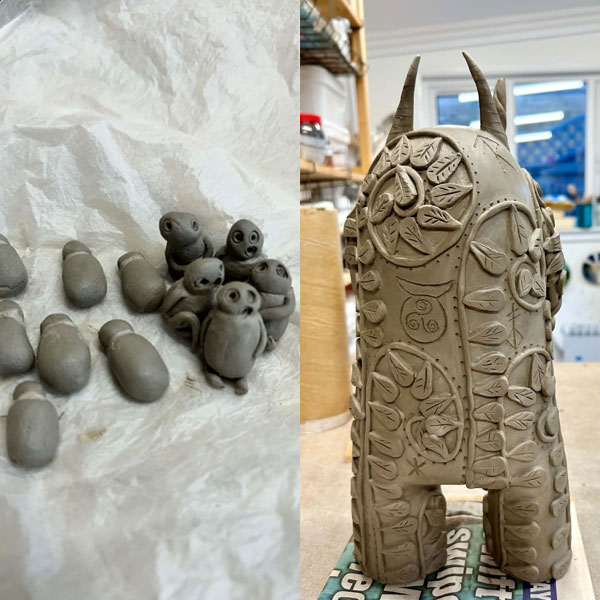
In the Studio
August often feels reflective. I find myself looking back over the year so far, noticing which ideas flourished and which quietly faded away. Also planning what is to come. I start to think about the season ahead that will involve celebrations of food, beliefs and gift giving. There is comfort in making objects that feel rooted in traditions and nourishing. Clay itself teaches the same lesson as the harvest: patience, effort, and trust in the process.
I am now in throes of getting everything ready for my open studio event in September. The kiln is running almost non-stop, work is being glazed, refined and finished. Details such as displays, packaging and signage are on being worked on. Organising behind the scenes is well underway, as I ask help from friends and family. The garden is being tidied up for visitors and pathways cleaned up to make them safe for said visitors. Seating and other considerations being planned out.
I am also advertising the event as wide as I can to as many people as possible. The more the merrier, all are welcome. I want people to see my work, to visit the pottery studio and to hopefully buy my creations and take them out into the world.
A Small August Ritual
Bake No Knead Bread and share it with family and friends.
Ingredients
- 520g bread flour
- 10g salt
- 454g lukewarm water
- 8g sugar
- 8g instant yeast
- 2 tablespoons room temperature butter
Instructions
- Mixing the dough: In a large mixing bowl, whisk together the flour, salt, sugar, and instant yeast. Add the water. Mix until the flour is absorbed. It will be a wet shaggy dough.
- Let it rise. Cover bowl with a tea towel or plastic wrap and set aside in a warm spot to rise for at least an hour or until double in size.
- Preheat the oven to 220C/ 425ºF. Grease two 1-qt or 1.5-qt oven-safe bowls or casserole dishes with about a tablespoon of butter each. Using spatula, punch down your dough, scraping it from the sides of the bowl, which it will be clinging to. As you scrape it down try to pull the dough toward the middle. You want to loosen the dough entirely from the sides of the bowl, and you want to make sure you’ve punched it down. Using a spatula divide the dough into two and pour each half into one of the bowls. This part can be a little messy — the dough is very wet and will slip all over the place.
- Let the dough rise again for about 20 to 30 minutes on the countertop near the oven (or near a warm spot) or until it has risen to just below or above (depending on what size bowl you are using) the top of the bowls.
- Bake it. Bake for 15 minutes.at 220c/425F and then reduce the heat to 190C/ 375º and bake for 15 to 17 minutes longer. Remove from the oven and turn the loaves onto cooling racks. If you’ve greased the bowls well, the loaves should fall right out onto the cooling racks. If the loaves look a little pale and soft when you’ve turned them out onto your cooling racks, place the loaves into the oven (outside of their bowls) and let them bake for about 5 minutes longer. Remove from oven and let cool for 10 minutes before cutting.